
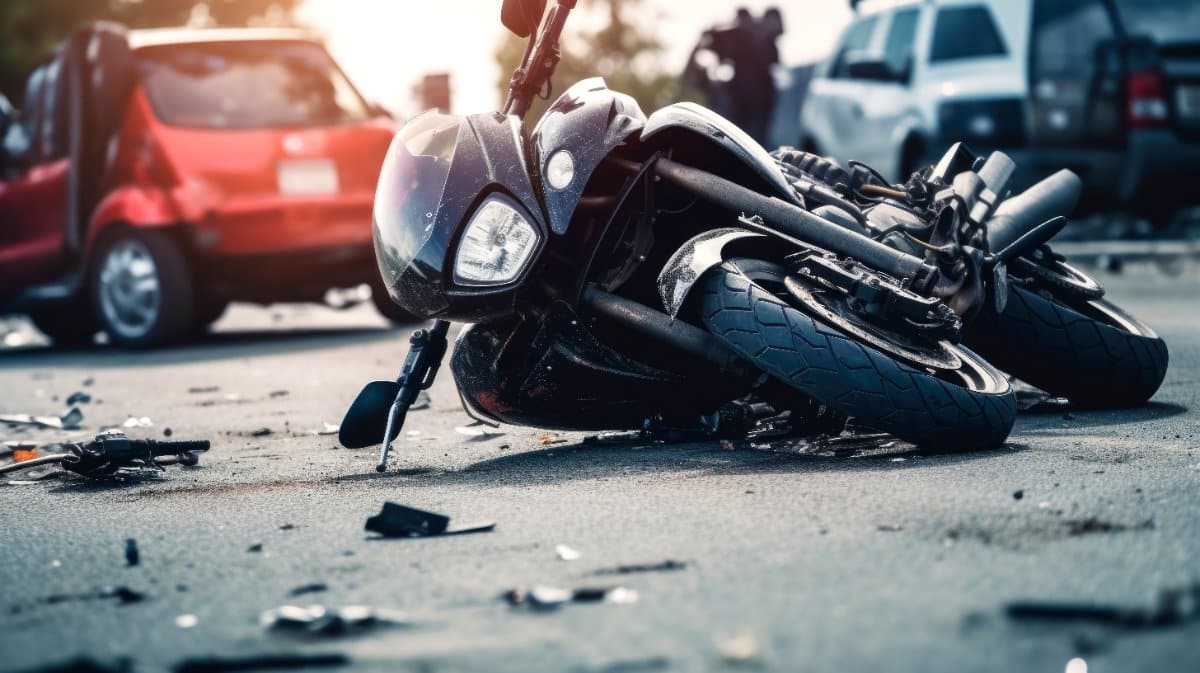
 Every vehicle accident is an unwelcome surprise, but motorcycle accidents are uniquely dangerous. In car accidents, occupants are protected by a sturdy metal frame, airbags, and seatbelts. Motorcyclists are protected by no more than a helmet and specialized riding gear. This means that these accidents often lead to more severe injuries and higher settlement values.
Unfortunately, this doesn’t mean that victims have any easier of a time getting the compensation they deserve. You’ll still need to fight the insurance company to get the compensation you are owed for your losses. We can help—call Banks & Jones to discuss your case with a motorcycle accident lawyer.
Lack of protection leads to greater injury risk
Riding a motorcycle comes with dramatically more risk than being in a car. Motorcyclists have almost nothing shielding their body from the full force of a vehicle, the road, or inanimate objects. In the best case scenario, a rider will have a helmet on and appropriate riding gear. For many, they don’t even have that. On top of that, there’s no airbags, no seatbelt keeping you in place, and nothing in the bike itself to absorb impact.
In collisions, motorcyclists are often thrown from their motorcycles. They may strike the pavement or another vehicle. If they hit the pavement, they may also slide across the ground, driving up their risk of road rash and an infection.
Even at lower speeds, this type of impact can have devastating consequences for a rider. A collision may leave a rider with broken bones, severe road rash, head injuries, and spinal cord trauma.
In high-speed crashes, the risk of a severe injury goes up dramatically. At higher speeds and on highways, riders are at significant risk of catastrophic injuries.
Catastrophic injuries are more common in motorcycle accidents
Motorcyclists are at a significantly greater risk of catastrophic injuries than people in enclosed vehicles. An injury is deemed catastrophic if it is severe enough to permanently impact a person’s ability to live as they did prior to the accident, live independently, return to work, or perform basic daily tasks. Some of the common types of catastrophic injuries affecting motorcyclists include:
• Spinal cord injuries: Damage to the spinal cord can be a devastating blow to a person’s mobility and independence. In the best case scenario, they suffer an incomplete spinal cord injury that heals with time and restores full function to the impacted area. But if they suffer a complete spinal cord injury—which means that the spinal cord is completely severed—communication between the brain and the affected areas is lost permanently. Depending on the part of the spine that’s affected, people may become paraplegic, quadriplegic, suffer incontinence, or have loss of sensation.
• Traumatic brain injuries: Traumatic brain injuries vary widely in severity and long-term outcomes, with some patients making full recoveries from severe injuries and some forever feeling the residual effects of a minor injury. There’s truly no way to know how your brain will respond to a traumatic injury until you go through it. Depending on which part of the brain is hit during the crash, people may experience memory loss, loss of their ability to speak or communicate, loss of reasoning, personality changes, motor function, and emotional regulation. In some severe cases, riders are left needing around-the-clock caregivers for the rest of their lives.
• Amputations and crush injuries: Amputations and crush injuries are both incredibly painful. When a motorcyclist is pinned below a bike, car, or another object, the limbs involved can be crushed beyond the point of restoration. This often leads to amputation and the need for physical therapy, occupational therapy, and ongoing care. Because of the likelihood of permanent disability and disfigurement, patients may be owed substantial compensation after this type of injury.
• Severe burns and road rash: Deep abrasions and burns can cover large parts of the body after a motorcycle accident, especially if a motorcyclist was traveling very fast or if they were hit by a much larger vehicle. Sliding along the pavement can lead to permanent scarring, permanent nerve damage, disfigurement, and chronic pain. There’s a potential need for skin grafts and cosmetic surgery, both of which are very painful and very expensive.
Why catastrophic injuries result in higher settlements
Catastrophic injuries tend to lead to higher settlements because of the scope of the rider’s loss. Not only are they likely to have massive medical bills that are enough to bankrupt even the wealthiest individual, their care needs may go on for the rest of their lives. On top of that, you have to consider their loss of employment. If someone is catastrophically injured at the age of 45, they could have had 20 or more years left to their career. That doesn’t just mean they lose their current income for 20 years. They also lose the chance to advance, get promotions, or earn raises.
There are also non-economic losses to consider. Even if someone can get the care they need with proper compensation, their life will never be the same again. That is a painful and tragic loss, and that loss of quality of life must be considered in a fair settlement.
There are other expenses related to catastrophic injuries that often come into play in these discussions. The cost of hiring caregivers, getting transportation to medical appointments, setting up adaptive equipment in a home, and securing expensive medical equipment can all be prohibitively high for most families.
We’re here to fight for you after a catastrophic motorcycle accident
If you or someone you love has suffered severe injuries in a motorcycle accident, the team at Banks & Jones is here to advocate for you. Let’s talk more about your options and next steps. Set up a consultation by calling or getting in touch with us online.

T. Scott knows the importance of interacting with colleagues to stay abreast of developments and changes in the legal world. T. Scott frequently teaches CLE courses on trial strategy, teaching other lawyers his methods for success in the courtroom, and is certified as a Rule 31 Mediator in the Tennessee Supreme Court. He is a member of the Knoxville Bar Association, the Tennessee Bar Association, the National Trial Lawyers, and both the Tennessee and American Associations for Justice.
Read more about T.Scott Jones