
 The days and weeks after a car accident may be among the most chaotic in your life. You’re shaken up, full of adrenaline, and trying to deal with damage to your vehicle. On top of that, you know you have to call your insurance company—but what happens if you are fully or partially at fault? At that point, it’s important to know what you are legally required to do and what can actually hurt you legally.
Having the right legal representation can make it much easier to navigate the aftermath of a car accident in Tennessee. We’re here for you. Call Banks & Jones to discuss your car accident claim now.
Tennessee’s fault rules
Tennessee is one of many states that uses a modified comparative fault system. This law allows victims who are partially at fault for an accident to still recover some compensation. However, you can only recover compensation if you are less than 50% at fault for the collision. If your share of fault is 50% or more, you cannot recover damages in court. Your compensation is reduced proportionately to your share of fault.
Consider how this works in practice. Imagine you’re in an accident. Your case goes to court, and the jury decides that you are 20% at fault because you were speeding at the time of the crash. However, the majority of the fault lies with the other party, who ran a red light. Your award of $100,000 is reduced by 20% to $80,000.
Now, imagine the court instead decides you are 49% to blame. Your compensation would be $51,000. If the court instead found that you were 50% at fault, your compensation would drop to zero.
This setup leaves a little bit of a gray area for accident victims. Drivers often assume they are at fault for an accident, when in fact the law may assign blame differently. This is why what you tell the insurance company matters. Your words could be used to increase your share of blame without you even knowing it.
Calling your own insurer
If you’re in an accident, it doesn’t matter if you’re at fault or not—you should call your car insurance provider. Your policy requires you to notify your insurer in a timely manner. Failing to do so could result in loss of coverage. That means that if the other party sues you, your insurance company may no longer have a duty to defend you.
When you call your insurer, keep these tips in mind:
- Stick to the basics. Give your insurer the date, time, and location of the accident. Tell them any details you remember about the other vehicle and its driver, as well as whether or not you and your passengers were injured. Give them a brief rundown of what happened from your point of view.
- Try not to speculate. Your insurance company’s job is to investigate the crash, so don’t try to fill in the gaps for them—don’t guess what the other party was doing or if something went wrong with your vehicle. You can only see so much as a driver, and police reports, accident reconstructions, and witness accounts may provide context that completely changes your understanding of the collision.
- Be honest. If your adjuster asks you a question that you don’t know the answer to, it’s better to say “I don’t know” than to guess. Don’t bend the truth to protect yourself or try to avoid liability.
Your insurer provides valuable benefits, and if you’re sued, they provide legal defense. However, they can only help you if you cooperate with their investigation.
Should you talk to the other driver’s insurance company?
Talking to your own insurance company is a low-risk scenario. You are contractually required to loop in your insurance company. Additionally, you are legally required to notify local law enforcement of any accident causing injury, death, or $50 or more in property damage and, additionally, Tennessee requires the filing of a crash report with the state if property damage exceeds $1,500, or if there was injury or death.
On the other hand, talking to the other driver’s insurance provider without a car accident lawyer can be very risky. You aren’t obligated to talk to their insurance provider like you are your own—and while your insurance provider has a duty to help you, the other party’s insurance company is not at all on your side. They may be nice to you or suggest that they’re just trying to get the facts of the accident, but in reality, they are building a case that protects them from financial loss. They may ask leading questions to get you to say something that implicates you. If they get you to make a recorded statement, they can pick it apart to look for inconsistencies or ways to shift liability onto you.
To put it simply, anything you tell the other party’s insurance company can be used against you.
You deserve better than that. If you want to get to the bottom of what really happened before you accept liability, don’t talk to the other party’s insurance company. Before you agree to do so, reach out to a car accident attorney. They can learn more about your accident, explain if you have a case, and help you navigate communication with the insurance company. This protects you from unintentionally handing your settlement over to the other party’s insurance provider.
Let’s talk more about your case—we’re here to help
The team at Banks & Jones is committed to supporting you as you seek compensation. If you’re not sure whether or not you have a case, find out during a consultation. Contact us online or call us today.
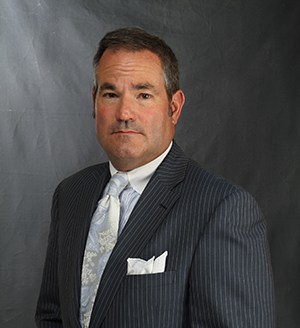
T. Scott knows the importance of interacting with colleagues to stay abreast of developments and changes in the legal world. T. Scott frequently teaches CLE courses on trial strategy, teaching other lawyers his methods for success in the courtroom, and is certified as a Rule 31 Mediator in the Tennessee Supreme Court. He is a member of the Knoxville Bar Association, the Tennessee Bar Association, the National Trial Lawyers, and both the Tennessee and American Associations for Justice.
Read more about T.Scott Jones